


Posted on June 1, 2026
“Sometimes the moment a child finds the right note is also the moment they begin to find their voice.”
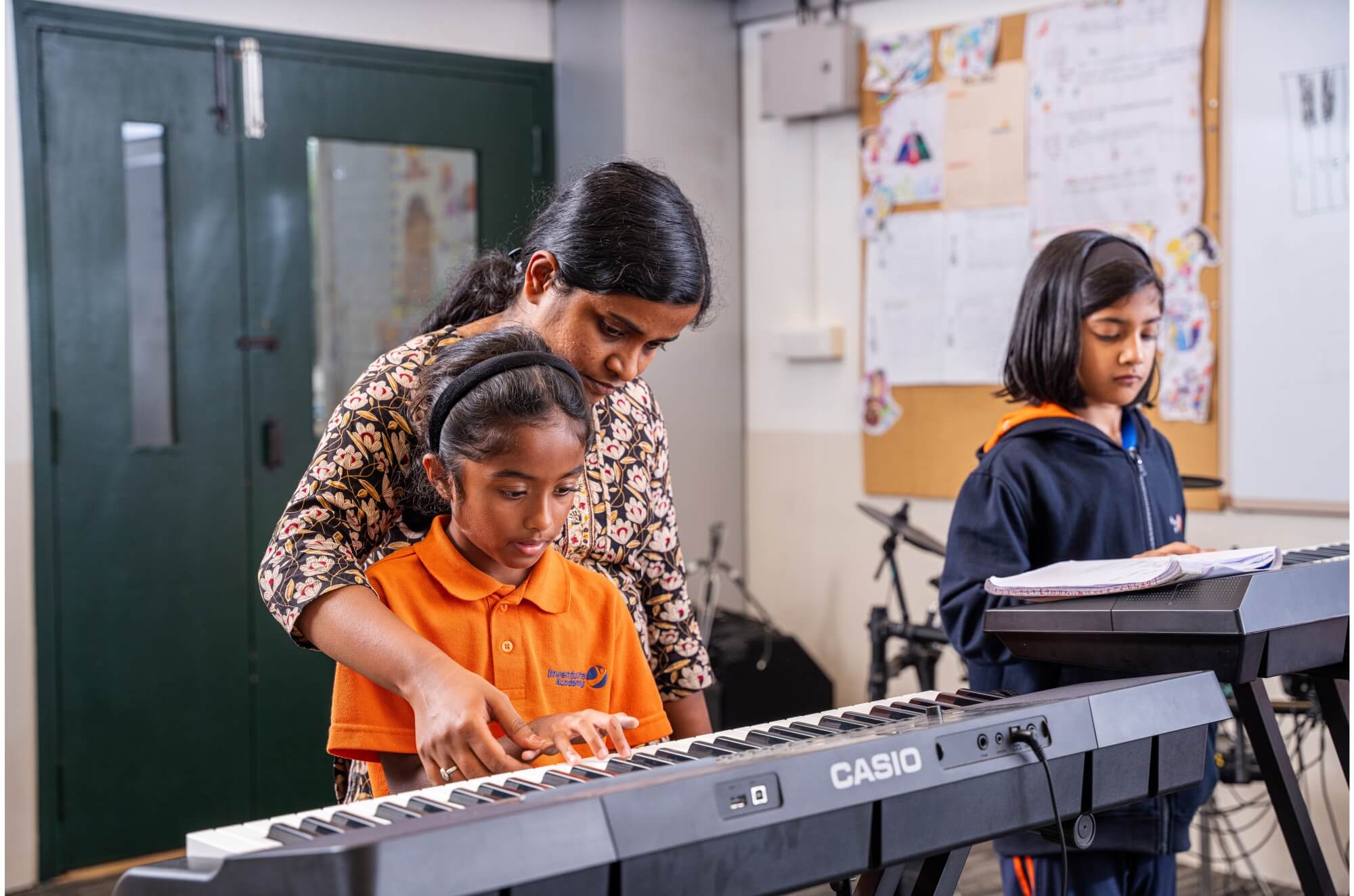
A child sits at the piano, pausing for a moment before pressing the first key.
The note is hesitant. The rhythm wavers. But slowly, with patience and repetition, the melody begins to find its shape.
In that quiet moment, something far greater than music is unfolding.
The child is learning to listen carefully. To try again after a mistake. To stay with a challenge until it begins to make sense. The child is discovering discipline, confidence, and a voice of their own.
And this is why music education cannot be seen as an “extra.” It is a powerful part of how young people learn to think, feel, and grow.
Yet in many conversations about education, music is still placed at the margins. Subjects connected directly to examinations often take centre stage, while creative disciplines are treated as enrichment rather than essential learning.
But if education is truly about preparing children for life — not just tests — then music deserves a far more central place in the learning journey.
Training the Mind to Notice, Listen, and Think
Learning music is an intensely thoughtful process.
A student reading a musical score must recognise patterns, remember sequences, interpret rhythm, and coordinate movement with precision. When learning an instrument like the piano, both hands must work together while the mind tracks structure, tempo, and expression.
Through this process, students strengthen focus, memory, and pattern recognition. They learn to observe details, anticipate changes, and think critically about how something should sound and feel.
Music trains the brain not just to perform, but to interpret. And these ways of thinking extend far beyond the music room.
A Language Beyond Words
For many children, music becomes a way to express what words cannot.
Through melody, rhythm, and performance, students discover a space where emotions can be explored safely and creatively. Music allows them to communicate ideas, feelings, and stories in ways that feel authentic to them.
Over time, this nurtures emotional awareness and confidence. Students begin to recognise that their inner voice matters — and that they have meaningful ways to share it with the world.
Learning the Power of Practice
Music also teaches one of the most profound lessons in education: growth takes time.
A difficult passage cannot be mastered in a single attempt. Students return to it again and again, refining their technique, adjusting their approach, and slowly improving.
In doing so, they learn perseverance and discipline. They experience firsthand that progress is built through consistency and effort. These lessons quietly shape how students approach challenges not only in school, but throughout their lives.
Confidence That Begins with a Note
One of the most powerful transformations educators witness through music is confidence.
A student who once hesitated to participate may stand on stage and perform for the first time. The experience of sharing their music, hearing applause, and feeling the energy of an audience can be deeply empowering.
That confidence rarely stays confined to the stage. Students often carry it into classrooms, discussions, and new opportunities. Music helps them discover that their voice — whether spoken or played — has value.
Learning to Create Something Together
Music also teaches students how to listen to one another.
In ensemble rehearsals and band performances, every instrument matters. Students must work together to create harmony, balance, and rhythm. They learn to adjust, support one another, and contribute to a shared outcome.
Through this process, collaboration becomes more than a concept — it becomes a lived experience. Students develop communication, responsibility, and leadership as they work towards something meaningful together.
At Inventure, Music Is Part of Learning to Be Human
At Inventure, we believe education should nurture the whole child — intellect, creativity, empathy, and confidence.
Music plays an important role in that journey.
Students are encouraged not just to learn instruments, but to explore expression, collaboration, and performance. From classroom experiences to school events and ensembles, music becomes a space where students experiment, grow, and discover new parts of themselves.
Some students arrive shy and unsure, hesitant to perform. Over time, they begin to step forward — first in small rehearsals, then on stage, and eventually in many other areas of school life.
Moments like these remind us that music is not simply about learning notes or mastering technique. It is about discovering voice, courage, and connection.
And these are qualities every child deserves to develop.
More Than Music
Education should not only fill young minds with information. It should help shape individuals who can think deeply, collaborate meaningfully, express themselves confidently, and approach challenges with resilience.
Music contributes to all of these.
It strengthens the mind, nurtures creativity, deepens emotional intelligence, and builds discipline.
When schools recognise the true value of music, they are not adding an extra subject. They are enriching the entire learning experience.
Because sometimes, the quiet moment when a child finally finds the right note is also the moment when they begin to discover who they are becoming.
And that is why music education is not an extra. It is essential.
Author Bio
Maanasaa K M
Music Faculty
4 years at Inventure academy